
This year's edition, three years lost to the pandemic and scheduling, wore a distinctive shade of green, and, as would befit an era of technology shift from internal combustion engines to electric motors, had a clutch of high-technology exhibits and concepts. But the excitement of the expo's heyday was missing.

New electric and hybrid vehicles on display as manufacturers plug into environment-friendly segment.
While sales of compact cars, including models such as Swift, Celerio, Ignis, Baleno and Dzire declined, sales of utility vehicles, including Vitara Brezza, S-Cross and Ertiga, increased 26.3 per cent to 19,177 units as compared to 15,178 in the year-ago month.

Various factors, including robust demand in rural markets and good response to new models, helped in driving the sales.

Leading carmakers Maruti Suzuki and Hyundai witnessed a double-digit drop in sales in October on account of the global semiconductor shortage impacting production. Kia India, Honda Cars and MG Motor also saw a fall in dispatches last month as compared with October 2020. However, companies like Tata Motors, Mahindra, Nissan and Skoda managed to post positive numbers last month despite the supply chain challenges.

Product launches to drive incremental volume growth for players such as Maruti Suzuki; medium and heavy commercial vehicle revival on track.

The number of participating automakers has fallen from 50 in 2018 to 30 this year. The count of exhibitors, including technology companies, has come down from 119 to 112. And showstopper luxury and supercar brands, including Toyota, Jeep, Lamborghini, Porsche, and Volvo will be missing. Similarly, the commercial vehicle makers also gave the show a miss -- a prolonged economic slowdown has dented their fortunes and near chances of any recovery.
An analysis of past 20 years' demand cycles done by Edelweiss Securities indicates that the auto sector is currently in the middle of a down cycle. Volume recovery, they say, is unlikely to be as sharp as in the past, unless there is strong fiscal support.

Operating margins have been the primary driver of corporate earnings in India in recent quarters, despite revenue growth suffering from weak consumer demand. Companies across sectors have reported a sharp improvement in earnings before interest, tax, depreciation, and amortisation (Ebitda) margins over the past two years, benefiting from lower commodity and energy prices. Higher margins more than compensated for slower revenue growth, resulting in double-digit growth in net profit for five consecutive quarters.
People are not just splurging on clothes, mobiles and household goods through the online route, they are also looking at cars and even houses.

Since last month, the realty (down 23%), auto (down 16%) and finance (down 14%) indices have underperformed the market by falling over 13%, as against 8% decline in the benchmark indices

The passenger car segment, in comparison, remained sluggish and grew a modest 1.9 per cent to 162,566 units in April

Sales of four- and two-wheelers almost halved in August, compared to the equivalent month last year.

Vehicle sales have been hampered by weak consumer sentiment and still-weak availability of financing following tighter liquidity at non-banking lenders since the middle of 2018.

The auto industry has had a mixed month. The build up to Dhanteras and Diwali was good but the demand tapered off subsequently.

Auto firms are likely to perform better in coming months.

New launches as well as upgrades to existing scooter models marked this year as manufacturers competed with each other to satiate the demand for new and interesting automatic scooters.

Honda cars has strengthend market share in India in the past five years.

The industry needs stimuli to help revive consumer demand and conversions.

Normal monsoon makes FMCG, automobile and consumer durable companies optimistic about growth prospects

Consumer stocks remain the biggest laggard on the bourses. The Nify50 weighting of FMCG stocks declined to a decade low of 9.9 per cent at the end of March this year, down 150 basis points from 11.4 per cent a year ago. At their peak in March 2013, major FMCG stocks, such as Hindustan Unilever, ITC, and Asian Paints, together accounted for 15 per cent of the Nifty50. But now together with automobile stocks, the consumer goods sector accounts for only 14.7 per cent of the index, down 200 basis points in the past 12 months and 37 per cent from the record high weighting of 23.4 per cent at the end of March 2014.

Most of the leading vehicle manufacturers were before the court, though their stand was not identical and sometimes contradictory.

For Hero MotoCorp, India's largest two-wheeler company, it's a calculated gambit to revive Harley-Davidson whose ride in India has been anything but easy since it got here.When automotive firms embark on alliances, it's a roll of the dice on how such marriages will play out.
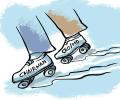
Mirroring the increase in the earnings of their companies, the chief executives and promoters of India's top listed firms gained handsomely from the boom last financial year. Their remuneration includes salaries, perquisites or perks, and profit-linked commissions.

The total dividend income for seven firms grows 25%.

...because their design did not get a thumbs up from motorcycling enthusiasts here

Tata Motors, Hero MotoCorp, Ashok Leyland, M&M are up 3-6% on BSE.

Leading automakers Maruti Suzuki, Hyundai and Tata Motors on Thursday reported robust sales in March as a shift towards personal mobility and pent up demand continued to help companies push dispatches to their respective retail partners. Toyota Kirloskar Motor, Honda Cars and Mahindra and Mahindra (M&M) also reported strong sales last month as compared to the year-ago period, when dispatches were adversely impacted due to the impending transition to BSVI from April 2020 and the nationwide lockdown to contain the coronavirus pandemic. The country's largest carmaker Maruti Suzuki India said its domestic sales stood at 1,49,518 units last month. The auto major had reported sales of 76,976 units in March 2020.

Here are 6 Indian motorcycles which were complete failures in the Indian two-wheeler market.

Unconventional and still quirky looking as ever, the Mojo gets me thinking of the Predator (from the Arnold Schwarzenegger classic) with hints of Yamah's (bug-eyed) 125cc Fazer and Triumph's Street Triple to stir things up.

India's flagship motor show Auto Expo 2023 kicked off on Wednesday with the global unveiling of Suzuki Motor Corporation's concept electric SUV 'eVX' which is slated to hit the market by 2025. The company's Indian arm Maruti Suzuki India is among the major manufacturers participating in the show that has returned after three years. The Concept eVX is a mid-size electric SUV concept designed and developed by Suzuki Motor Corporation (SMC), Japan. It will be powered by a 60 kWh battery pack offering up to 550 km of driving range on single charge.

India is sceptical that Tesla might import into the country cars made in China. Tesla executives were in India last month and appear to have proposed a factory in the country. But do not be surprised if that does not happen in a hurry.

Pawan Munjal, chairman and managing director of Hero MotoCorp, the country's biggest two-wheeler maker, leads the pack among automobile CEOs.

'I have personally been very keen on investing in lithium ion battery technology for some time.'

New participants included Chinese players such as Great Wall Motors and Haima Automobile along with Olectra.

Striking workers lacked support in the Pimpri-Chinchwad-Chakan belt.

Besides their country of origin, General Motors, Ford Motor and Harley-Davidson have another trait in common: all three have failed in India, the world's fifth largest automobile market. All three of them took a tough call to de-prioritise India as a market amid disruption from heightened regulations and sharper focus on capital allocation by the parent.
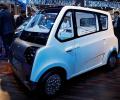
An EV has to be purchased along with the battery as there are hardly any battery swapping, rental, or leasing business models available across India.

The country's largest carmaker Maruti Suzuki India (MSI) on Monday reported a 11.8 per cent increase in wholesales to 164,469 units in February. The company had sold 147,110 units in February last year, Maruti Suzuki India (MSI) said in a statement. Domestic sales increased 11.8 per cent to 1,52,983 units last month, as against 1,36,849 units in February 2020, it added.
